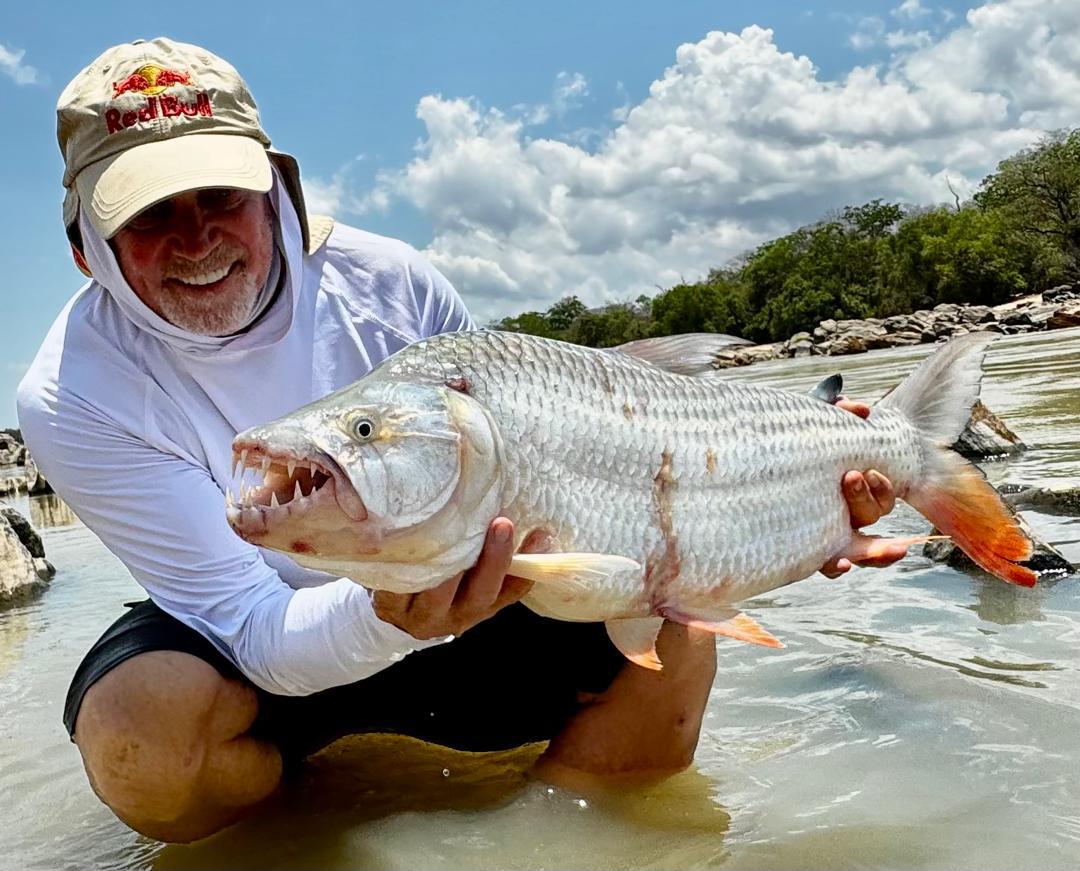
Tanzania's tigerfish season has a beginning and an end, and understanding those rhythms is the difference between a trip that produces and one that merely gets you to Africa. The Rufiji River system — which includes the Nyerere Dam, the main Rufiji channel, and the Kilombero tributary — is governed by a single annual cycle: the short rains, the long rains, and the dry season in between.
Here is how each window actually fishes.
July – August: Season Opening, Rising Consistency
The long rains end in May. By July, the river has dropped and cleared to the point where serious fishing is possible. This is not peak season, but it is season — fish are present, guides are on the water, and the camps are open.
The advantage of July and August is availability. The lodges that fill up by October still have space. Rates may be softer. And there is something to be said for being the first rods on the water after the off-season, fishing structure that has rested for six months.
The limitation is variability. The upper Rufiji and the Kilombero can still carry colour in July after a late rain event, and fish tend to be more dispersed across a rising system. Guides compensate by covering more water, but the efficient sight-fishing and targeted casting that defines peak season is less consistent in these months.
Recommended for: anglers who want flexibility on timing and are comfortable with fishing conditions that require adjustment.
September – October: Peak Season, Best Conditions
By September, the Rufiji has dropped to its lowest pre-spring levels and the Nyerere Dam has stabilised. The water below the dam wall is as clear as it gets. Fish have spent the winter feeding and are in prime condition — fat, aggressive, and concentrated in predictable holding water.
This is when the guides know exactly where to put you. The points, the channel seams, the submerged timber — every piece of structure has fish in September and October, and the guides have spent enough time on the water to know which ones hold fish on which tide of the day.
The other advantage of September and October is predictability of weather. Daytime temperatures in the park run 25–32°C. Nights are cool. Rain is rare. You are fishing in near-perfect conditions.
The trade-off is demand. These are the most sought-after weeks in the Tanzania tigerfish calendar. Operators that run small groups — four rods maximum per camp — fill their September and October slots well in advance. A booking enquiry in June for October is often already too late for the best concessions.
Recommended for: anyone who can only do one Tanzania tigerfish trip and wants the highest probability of optimal conditions.
November – December: Extended Season, Big Fish Push
November is a sleeper month. It sits after the main demand peak and before the short rains that typically begin in November-December in coastal Tanzania. On the Rufiji — which lies further inland — the onset of rains can lag by two to three weeks relative to the coast.
What this means in practice is that many of the best weeks of the season fall in November, when bookings have thinned out. The fish are still there. The water is still clear. And the camps are running at reduced capacity, which means more guide attention per angler.
November also produces the largest fish of the year in most seasons. The tigerfish have been feeding hard through September and October. The biggest fish — the double-digit specimens that make serious fly fishers plan trips around Tanzania specifically — tend to come in the back half of the season when the fish are heaviest.
December is variable. The short rains can arrive early or late depending on the year. Some seasons, the fishing holds clean through mid-December. Others, it deteriorates from late November. This is the risk of end-of-season booking: you are betting on weather patterns that don't always conform to the average.
Recommended for: experienced fly fishers specifically targeting trophy fish who can accept some variability in conditions.
January – June: Off Season
The long rains run from March through May, and their effects on the Rufiji are dramatic. The river rises several metres, flows at a rate that makes navigation difficult, and carries significant sediment load that kills visibility. No commercial fishing operations run during this window, and the national park access roads can become impassable.
January and February sit in the short dry period between the two rain cycles. Some operators run limited programmes in January and February on the Rufiji in good years, but these are not reliably bookable and the conditions are unpredictable.
The short answer: if you're planning a Tanzania tigerfish trip, plan it for July through November. September and October if you want the best odds. November if you're specifically targeting a trophy. July-August if flexibility is more important than optimal conditions.
Booking Lead Times
The concession-based operators in Nyerere National Park run small, limited programmes. Combining small capacity with high demand in a narrow season creates a booking environment where last-minute availability is rare. The realistic lead time for peak season — September, October, November — is six to twelve months for the better-regarded concessions.
Off-peak months (July, August) are more accessible on shorter lead times, but even here, the camps that attract serious fly fishers tend to fill up once word spreads through fishing circles.
All four lodges bookable through DriftBook operate in the July–December window. Enquire early.