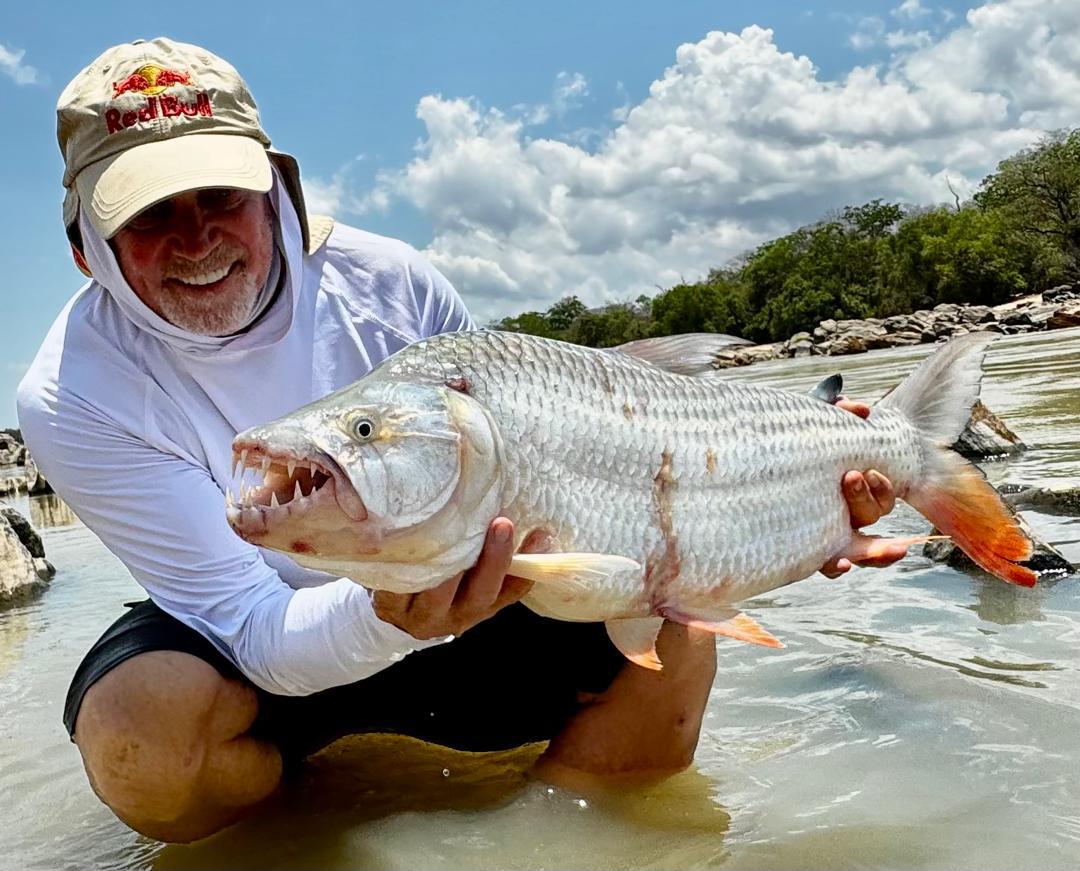
The Nyerere Dam — completed in the late 2010s and inundating a vast stretch of the Rufiji River valley — was never built with fly fishing in mind. It was built to generate electricity. But in the years since the reservoir began filling, something unexpected has been happening in the clear, oxygenated water below the dam wall: tiger fish have moved in, they have grown big, and almost nobody outside a small circle of Tanzanian outfitters knows about it yet.
That window of obscurity is closing fast.
Why Below-Dam Fisheries Produce Trophy Fish
The science here is consistent across Africa. When a large impoundment is created, the water released through the turbines and spillways is cold, heavily oxygenated, and rich in nutrients carried down from the reservoir above. The channel below the wall becomes a feeding station. Insects, baitfish, and crustaceans concentrate in the outflow. Predatory species — and tigerfish are apex predators — follow the food.
At Nyerere, this effect is amplified by the sheer size of the reservoir behind it. The dam wall holds back an enormous body of water. Below it, the Rufiji runs clear and swift, with visibility extending several metres — conditions that are unusual in a river system that, further downstream, runs through alluvial floodplains and carries heavy sediment loads during the rains.
Crystal-clear water and tigerfish is an underappreciated combination. These fish hunt by sight. They can track a streamer from ten metres away, accelerate, and take it on the first pass. The hook-up rate in clear water — when you get the presentation right — is extraordinary.
The Current State of the Fishery
As of 2025, fewer than five licensed operators work the Nyerere Dam stretch. This is a function of logistics and access, not lack of fish. The national park surrounding the area — Nyerere National Park, formerly Selous Game Reserve — imposes strict concession controls. Getting permission to operate on the dam requires years of relationship-building and navigating Tanzania's parks authority.
The operators who have made it through that process are running exceptional programmes. Small groups — typically two to four rods — are fishing from flat-bottomed aluminium boats, covering water that hasn't been pressured in decades. Guides are local; they know where the channels run, where the drop-offs are, and which points hold fish at different water levels.
Reports from the 2024 season included multiple fish in the 8–12 lb range and one documented catch of just over 14 lbs — a fish that, in a well-known Zambian fishery, would make front-page news in any fly fishing publication. On the Nyerere Dam, it barely registered as unusual.
How the Fishing Actually Works
The standard approach is streamer fishing with 8 or 9-weight rods, floating or intermediate lines, and 30–40 lb fluorocarbon leaders. Tigerfish have teeth that will destroy a light tippet on the strike. Wire trace is optional but many experienced Tanzania guides skip it — they feel it reduces strikes and that the fluoro holds well enough on a properly set drag.
Casts are typically 15–25 metres to structure: submerged timber, rocky points, the edges of the main channel current seam. The retrieve is aggressive — tigerfish respond to speed and erratic movement. A slow retrieve on a dead swing will occasionally produce, but the committed eat typically comes on a fast strip that triggers the predator response.
The surprise bonus species at Nyerere is vundu catfish. These giant bottom-feeders — which can exceed 100 lbs — are occasionally encountered on streamers fished deep against the current. Landing a vundu on a fly rod is a different kind of adventure: less spectacle, more endurance.
Getting There
Access to the Nyerere Dam section is through Dar es Salaam, with charter flights into the park. Most operators run 5 or 7-night programmes that include accommodation in tented camps within the concession. The camps are remote — no Wi-Fi, no cell signal — which is precisely the point.
Season runs from July through December, with the peak months being September through November when water levels stabilise post-rains and the fish stack up in predictable locations. Outside that window, river access becomes difficult and the fishing less consistent.
The operators currently working the Nyerere Dam section are bookable through DriftBook. Availability is limited — this is not a high-volume fishery and the concession holders are deliberate about keeping rod pressure low. If this fishery is on your list, the time to move is now, before the word fully gets out.